

Quick Summary:
- There are elements of several popular psychological theories and stances that contradict Islamic beliefs.
- The Branches: A concise overview of Social, Developmental, Behavioral, and Cognitive psychology.
- Psychoanalysis: Why reducing human development to sexual fixation clashes with Islamic dignity.
- Behaviourism: Why the denial of free will contradicts Islamic moral accountability.
- Humanistic Psychology: Why seeking the “Pleasure of Allah” supersedes the goal of “Self-Actualisation.”
- While there are contradictions, in many areas Islam and psychology are harmonious.
Would you rather watch the this blog’s companion YouTube video? Go to YouTube here, or watch below.
At first glance, the two might seem worlds apart: one is a divine revelation, the other a modern academic discipline. But the relationship between Islam and psychology is more nuanced than a simple yes or no. To understand it properly, we need to first understand what psychology actually is, examine where it conflicts with an Islamic worldview, and then, perhaps more importantly, explore why the two are not only compatible, but genuinely synergistic.
What Is Psychology?
Cambridge Dictionary defines psychology as “the scientific study of the way the human mind works and how it influences behaviour, or the influence of a particular person’s character on their behaviour.”
But psychology is not one single thing. It’s a broad field made up of several distinct branches, each with its own focus:
- Social Psychology examines how other people and groups influence our thoughts, feelings, and actions.
- Developmental Psychology studies how our thinking and behaviour change across the lifespan, from infancy to old age.
- Behavioural Psychology looks at how we learn and adapt in response to our environment.
- Cognitive Psychology focuses on internal mental processes like thinking, memory, and perception.
With that foundation in place, let’s look at some of the major schools of thought in psychology, and where they stand in relation to Islam.
Freud: The Disturbed Father of Modern Psychology
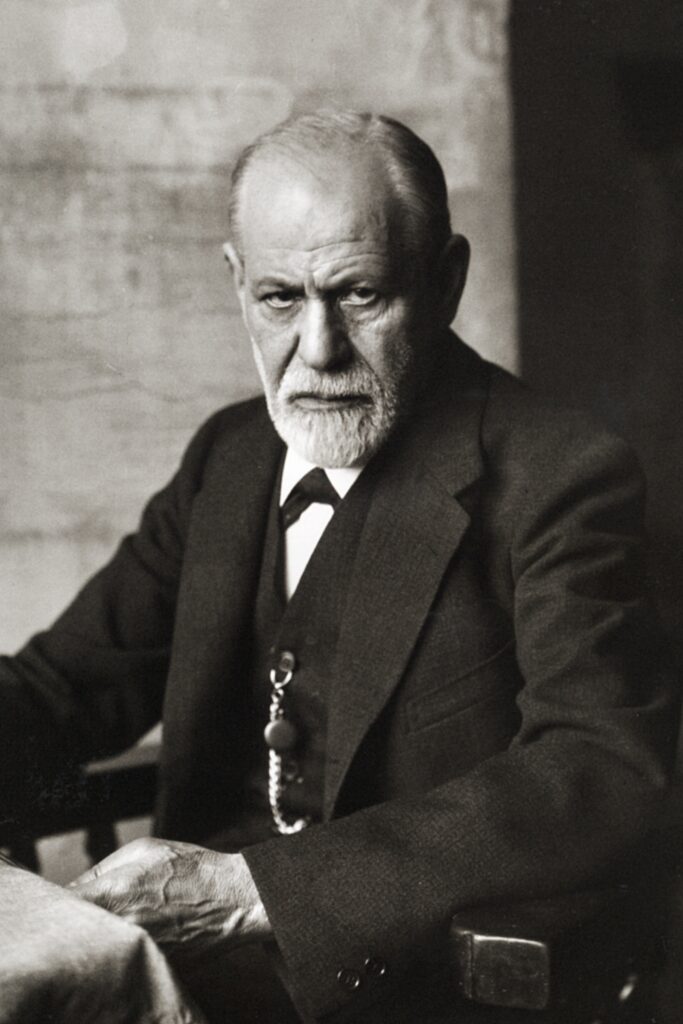
Sigmund Freud is often called the father of modern psychology. Working between the 1890s and 1930s, he developed an elaborate theory of human development, one element of which he called the stages of psychosexual development. These stages can be described as follows:
- Oral stage: pleasure derived through the mouth (suckling)
- Anal stage: pleasure through control of bodily functions
- Phallic stage: preoccupation with the genitals, giving rise to the Oedipus complex in boys and the Electra complex in girls
- Latency stage: a period of relative dormancy
- Genital stage: adulthood
According to Freud, if a child’s needs are unmet at any given stage, they become “fixated” there, and this fixation shapes their adult personality and behaviour.
There is much more to Freudian theory than this, but let’s pause and ask the obvious question: is any of this credible?
Frankly, no. Freud’s theories have virtually no scientific backing. He conducted no rigorous research. His ideas cannot be empirically tested. His conclusions were drawn from disturbing case studies, his own introspection, and that of his colleagues. Freudian theory is not based on sound scientific inquiry, it is elaborate speculation from a clearly troubled mind. From an Islamic perspective, a framework that reduces human development to infantile sexual fixation is not only unfounded but philosophically incompatible with the dignity Islam awards to the human being.
Behaviourism: The Blank Slate
From the 1930s onwards, a very different school of thought took hold: Behaviourism, championed most prominently by B.F. Skinner. Where Freud looked inward, behaviourists looked outward, studying only what could be observed and measured: behaviour.
The core mechanisms of behaviourism include:
- Classical conditioning: associating stimuli to produce learned responses
- Operant conditioning: shaping behaviour through reward and punishment
- Social learning: observational learning through attention, retention, reproduction, and motivation
On the surface, there are useful insights here. But at its most extreme, what Skinner called “radical behaviourism”, the theory makes a deeply problematic claim: that human beings are blank slates, entirely shaped by external stimuli, with no free will whatsoever.
This is where it fundamentally breaks with Islam. The belief in human agency, that we are morally responsible for our choices, is foundational to Islamic theology. A worldview that denies free will cannot be reconciled with a faith built on accountability, reward, and punishment in the hereafter.

Humanistic Psychology: Closer, But Still Missing the Point
Humanistic psychology emerged in the mid-20th century as a direct reaction against the cold determinism of radical behaviourism. Its central argument: human beings are not mere machines responding to stimuli. We have souls, free will, and an innate drive toward growth and self-fulfilment.
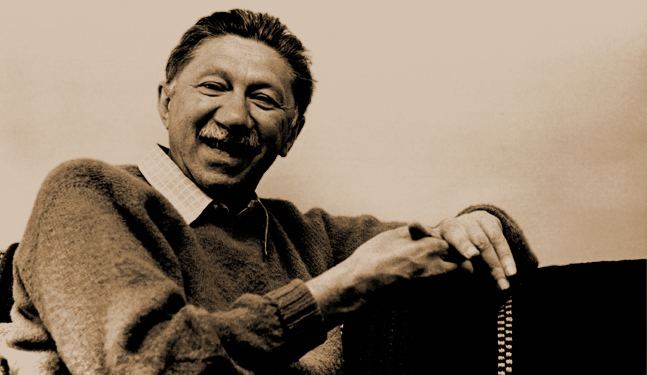
Key figures include Abraham Maslow and Carl Rogers. Maslow is best known for his famous Hierarchy of Needs, a pyramid model suggesting that human motivation follows a predictable order. At the base are physiological needs (food, water, shelter). Above that comes safety and security, then love and belonging, then self-esteem, and finally, at the peak: self-actualisation, i.e. the realisation of one’s full potential, associated with creativity, purpose, meaning, and morality.
The pyramid feels intuitive. And Humanistic Psychology gets some things right: yes, human beings are created with desires, ambitions, and a drive toward finding meaning in life.
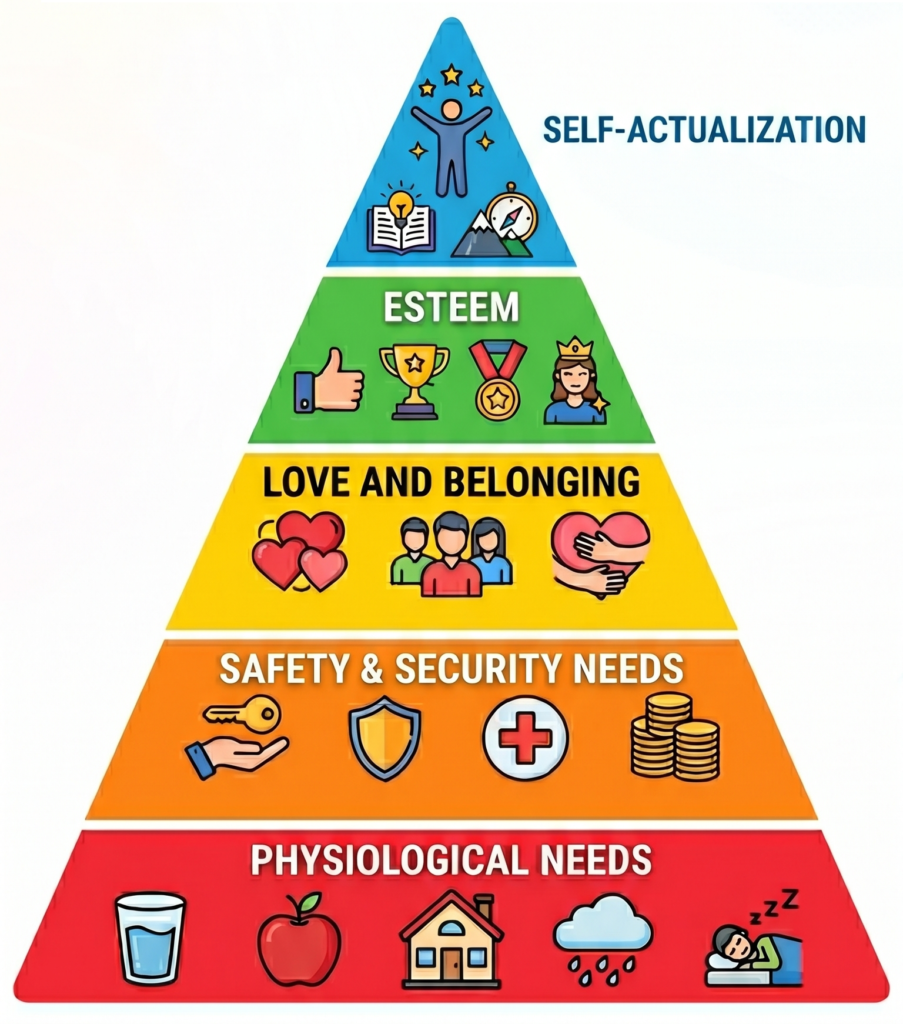
But here is the critical flaw. Maslow places self-actualisation as the ultimate goal of human existence, and originally framed it as something only attainable after all lower needs have been met. The beggar on the street cannot self-actualise. The prisoner cannot. The person struggling to survive cannot.
Islam tells a very different story.
Our ultimate goal is not self-actualisation, it is the pleasure of Allah. And nothing is a prerequisite for that. The beggar and the billionaire, the famous and the forgotten, the healthy and the sick are all equally capable of attaining Allah’s pleasure. No hierarchy of needs stands between a person and their Lord. Some of those most accomplished people in their deen in human history were those who had the least.
Also, Islam offers a clear answer to the question of our ultimate purpose. Allah says in the Quran: “I did not create jinn and humans except to worship Me” (Adh-Dhariyat 51:56). Our ultimate goal is obedience to Allah and striving for His pleasure, not the realisation of our own potential. While some elements of self-actualisation do mirror the ambitions and drives Allah has created within us innately, they are only meaningful when pursued with the right ‘niyyah’, or intention. That is with Allah’s pleasure as the goal rather than self-fulfilment as an end in itself.
So Are They Compatible?
We’ve seen where modern Western psychology conflicts with Islam, in Freud’s reductionism, in behaviourism’s denial of free will, and in Humanistic Psychology’s misdirected notion of the ultimate human goal.
But does that mean psychology is worthless? Should we reject it entirely?
Pause for a moment. Let’s not throw the proverbial baby out with the bathwater!
The branches and tools of psychology, that of social, developmental, cognitive, and behavioural, offer genuine insights into how human beings function. Understanding how trauma shapes the mind, how habits form, how communities influence individuals, how cognition can distort perception: these are not threats to Islam. In many cases, they are congruent with Islam and offer profound insights for our worldly and spiritual growth as Muslims.
The key is discernment. Islam provides the framework, the worldview, the values, the ultimate purpose. Psychology, can serve as a useful tool within that framework.
The two are not enemies. Approached wisely, they are partners with each enriching the other in the service of understanding the remarkable human being that Allah has created.
This is the first in a series exploring the intersection of Islamic thought and modern psychology.


Leave a Reply